Conte aos seus amigos sobre este item:
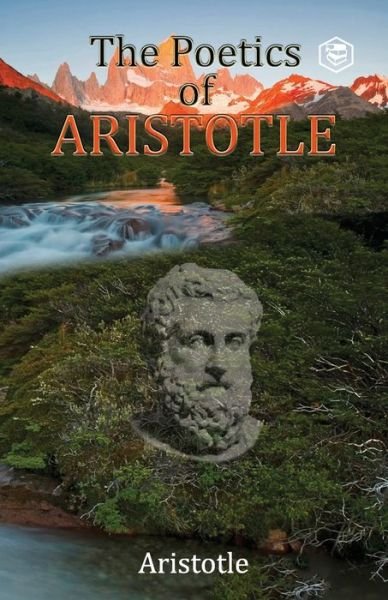
Untying Aristotle's Poetics for Storytellers
Item sob encomenda (no estoque do fornecedor)
O que dizem nossos clientes:


Untying Aristotle's Poetics for Storytellers
Aristotle
This book offers a clear and readable version of Aristotle's Poetics, and a fresh look at his ideas on plot and plot structure.
The Greek tragedy is the great-grandfather of the movie industry, and most of the principles that go into the production of a successful Hollywood script were first formulated by Aristotle. But due to its terse style, the Poetics has never been well understood. Commentators have pointed out apparent self-contradictions, logical errors, lack of coherence and cryptic passages. This new take resolves many of these problems. Aristotle's model of the tragedy is explained in a way where the pieces fit together and that makes sense in the real world of storytelling.
We see a beautiful and coherent theoretical model reveal itself.
Aristotle is a deep thinker capable of penetrating to the heart of his subject. His model is based on the study of the Greek tragedy, which evolved in response to spectator and judge reactions. This anchors it to the practical realities of what works and does not work. He himself anchors it in his philosophy and understanding of human nature.
In the first part of Untying Aristotle's Poetics for Storytellers, Aristotle's model of the tragedy is explained. The second part is a new, rendering of the Poetics, which will help you avoid many of the traps that until now have led readers and interpreters astray.
| Mídia | Livros Paperback Book (Livro de capa flexível e brochura) |
| Lançado | 21 de março de 2018 |
| ISBN13 | 9781980591535 |
| Páginas | 122 |
| Dimensões | 127 × 203 × 7 mm · 127 g |
| Idioma | Inglês |


![Cover for Aristotle · The Physics. Writings on Natural Philosophy (Concise Edition) - Foundations (Paperback Book) [Concise edition] (2023)](https://imusic.b-cdn.net/images/item/original/668/9781804175668.jpg?aristotle-2023-the-physics-writings-on-natural-philosophy-concise-edition-foundations-paperback-book&class=scaled&v=1673953646)