Conte aos seus amigos sobre este item:
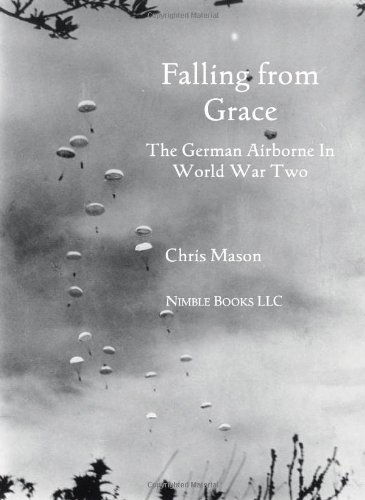
Falling from Grace: the German Airborne (Fallschirmjager) in World War II Chris Mason
Item sob encomenda (no estoque do fornecedor)
O que dizem nossos clientes:


Falling from Grace: the German Airborne (Fallschirmjager) in World War II
Chris Mason
Nazi Germany pioneered the use of airborne forces in the 20th century and used them effectively early in the war as part of integrated, combined-arms offensives. Yet the German airborne branch literally self-destructed in 1941. What happened, how did the Germans react, and what historical insights in the use of airborne forces can modern day planners derive from the German experience?
In the late 1930's, an aggressive and innovative rearmament program in Nazi Germany gave rise to the tactics of vertical envelopment. Pioneering the use of gliders as troop carriers, parachutists, and the air landing of reinforcements to exploit tactical success, the German Wehrmacht used the new technique of airborne warfare with startling success as part of the Blitzkrieg campaign against the Low Countries and France in 1940. When the tactical doctrine used to seize bridges, strong points and road junctions in Fall Gelb was transferred to the seizure of an entire island that was heavily defended in 1941, however, the German airborne effectively committed suicide. In ten days in May 1941, half the airborne forces in the entire German army were killed or wounded on Crete. Hitler wrongly ascribed the disaster to a playing out of the surprise factor, and banned further parachute operations until 1943. The right conclusions were arrived at by the commander of the German airborne himself, General Kurt Student, in post-battle analysis. His own insistence on faulty tactics was devastating. Although they remained a potent and professional force, Hitler's effective ban on the future use of airborne forces lasted until 1943, when it was clear the Allies still very much considered paratroops a viable form of warfare. By then, Germany's ability to conduct airborne operations on a significant scale had long since passed.
The German innovation of vertical envelopment in the 1930's was as revolutionary to modern military tactics as the simultaneous development of the integrated combined arms offensive known today as the Blitzkrieg. In putting Billy Mitchell's ideas into practice, Luftwaffe General Student demonstrated vision, innovative thinking and practical military skill. Poor intelligence and reliance on his "spreading oil drops" tactics for the deployment of his paratroopers, the Fallschirmtruppe, on Crete, however, led directly to their removal as a significant weapon from the German arsenal in World War II. Nevertheless, Student proved that airborne troops have unique capabilities as a force multiplier in both offensive and defensive warfare. The German experience, which also demonstrated the limitations of airborne forces, was studied in depth by the U. S. Army after the war and incorporated into airborne doctrine.
| Mídia | Livros Paperback Book (Livro de capa flexível e brochura) |
| Lançado | 20 de maio de 2010 |
| ISBN13 | 9781608880324 |
| Editoras | Nimble Books |
| Páginas | 60 |
| Dimensões | 210 × 279 × 3 mm · 158 g |
| Idioma | Inglês |








![Cover for Thomas L McKenney · History of the Indian tribes of North America [Single-Volume Facsimile Edition] with Biographical Sketches and Anecdotes of the Principal Chiefs (Hardcover Book) (2021)](https://imusic.b-cdn.net/images/item/original/359/9781608882359.jpg?thomas-l-mckenney-2021-history-of-the-indian-tribes-of-north-america-single-volume-facsimile-edition-with-biographical-sketches-and-anecdotes-of-the-principal-chiefs-hardcover-book&class=scaled&v=1624887035)
![Cover for Fred T Jane · Jane's Fighting Ships 1920 (Hardcover Book) [Facsimile edition] (2021)](https://imusic.b-cdn.net/images/item/original/342/9781608882342.jpg?fred-t-jane-2021-jane-s-fighting-ships-1920-hardcover-book&class=scaled&v=1642841503)